
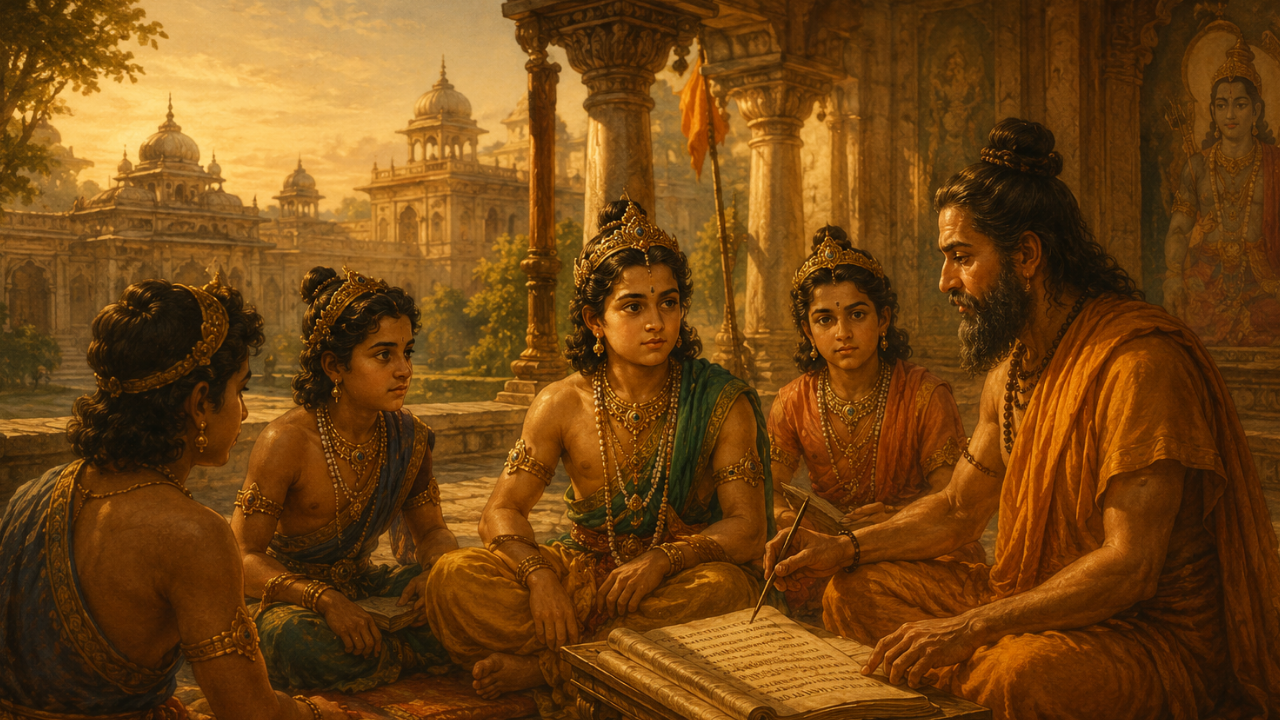
For a young prince, education extended far beyond books. As Kautilya writes in the Arthashastra, a ruler must be trained continuously and surround himself with learned advisers, reflecting the belief that a king’s education never truly ended. History and ancient texts suggest that royal boys were introduced early to language, literature, mathematics and philosophy, but these subjects were only the beginning. Their teachers wanted them to understand how a kingdom actually functioned. They learned why crops mattered as much as soldiers, why a failed monsoon could become a political crisis and why listening carefully could sometimes prevent a war.
A prince was expected to understand the rhythm of ordinary life because one day he would govern people whose lives looked nothing like his own. Discussions about taxation, trade routes, irrigation, justice and diplomacy became part of everyday learning. Instead of memorising facts for examinations, they were preparing for decisions that could affect thousands of lives.
About the Author