Let us accept it: science never fails to amaze the human mind, and sometimes, the greatest science isn’t happening in deserts or deep oceans. It’s hiding in museum collections, waiting for a second look. That’s exactly what happened in Japan, where a fossil remained buried in a rock specimen for nearly 30 years before researchers uncovered a remarkable surprise. According to reports, fossil bones from what initially seemed to be a typical museum specimen could be the remains of an undiscovered species of mosasaur, a massive marine reptile that dominated the oceans during the age of dinosaurs. Scroll down to read the details.
The secret of a 30-year-old specimen
According to reports, it was discovered by a team of researchers from Okayama University of Science, Tokyo City University, the Natural History Museum, Kishiwada City (Osaka Prefecture), and other institutions. It is said that the scientists who reexamined rock samples collected between 1990 and 1992 from Sobura in Kaizuka City, Osaka Prefecture, uncovered four previously unrecognized fossil bones hidden within the rock matrix for decades. The fossils had been in museum collections all along, but new developments in fossil preparation techniques and scientific understanding allowed scientists to identify features that had been missed during the initial examination.
The first mosasaur fossil from Japan
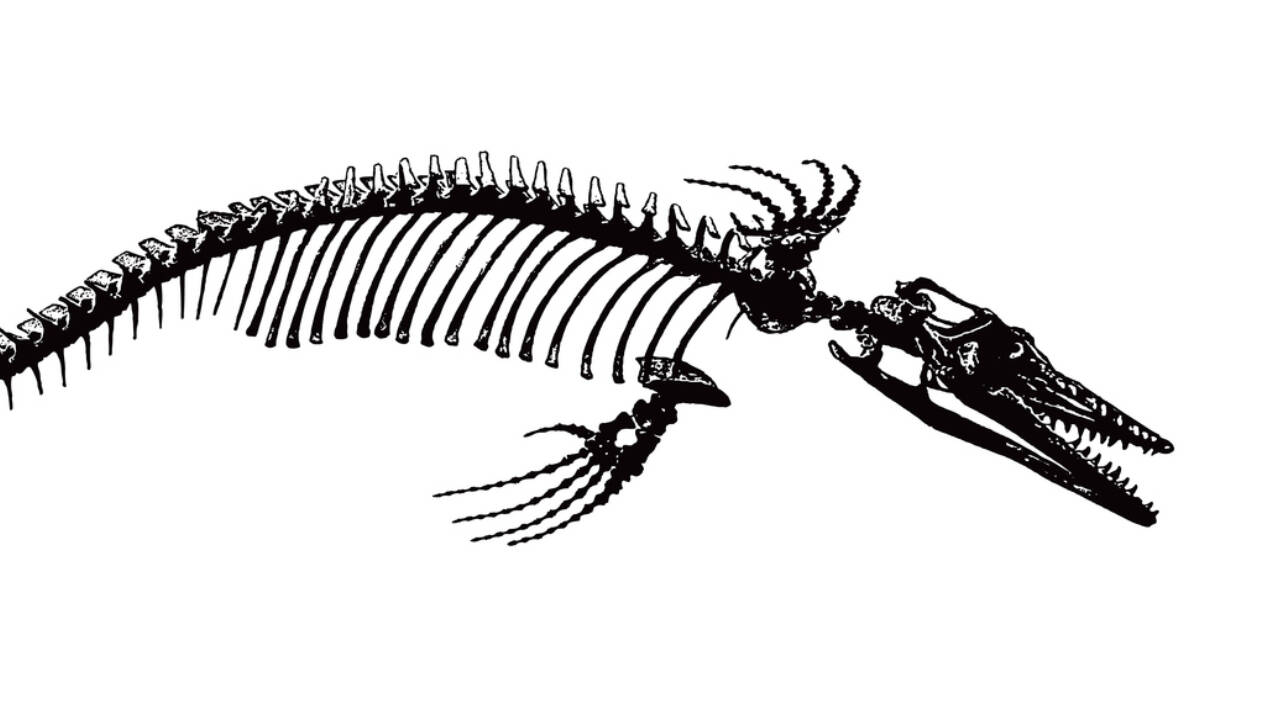
The first mosasaur fossil from Japan
The experts believe that one of the newly identified fossils is the premaxilla, the forward-most bone of the upper jaw. This is the first confirmed finding of a premaxilla in a fossil of a Japanese mosasaur and one of the most important findings in the study. It is also reported that the fossils were first excavated more than 30 years ago, but scientists lacked the comparative specimens and anatomical details needed to correctly identify the bone. After decades of global research on mosasaurs, scientific understanding has expanded, enabling researchers to recognize the fossil as such.
Could it be a new species?
While that is still a matter of debate, experts feel that perhaps the coolest part of the find is in another fossil bone, called the basisphenoid, found near the reptile’s braincase. The research highlights that they found some unusual anatomical features in mosasaurs that have not been described before. They include sidewardly extending short horn-like projections and the absence of a ventral median groove, characteristics that distinguish the specimen from known species. According to research, these unique differences mean the fossil might be an as yet undiscovered species of mosasaur, but further research is required before any confirmation is made.
Cretaceous giants of the ocean
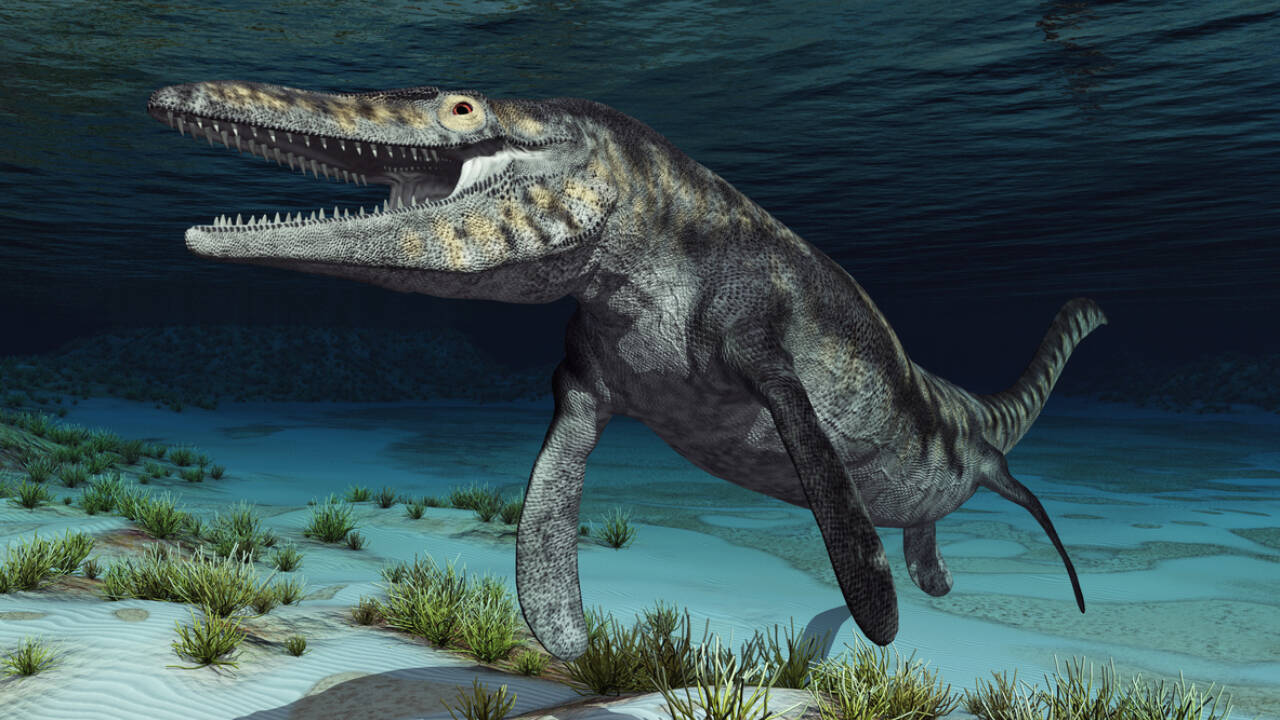
Some species grew to more than 15 meters (50 feet) long
For the uninitiated, about 98 to 66 million years ago, mosasaurs were among the fiercest ocean predators. They were not dinosaurs as they are often mistaken to be, but were marine reptiles more closely related to modern monitor lizards and snakes. These apex predators prowled the world’s oceans, wielding powerful jaws and sleek bodies to hunt fish, squid, turtles and other sea creatures. Some species grew to more than 15 meters (50 feet) long, and they ruled the prehistoric seas until the mass extinction event that killed off the dinosaurs.
Why collections in museums matter
It is believed that museums are no less than encyclopedia and museum archives around the world are filled with countless fossils and artifacts, many collected decades ago with techniques that have since improved dramatically. As technology improves and more data is available for comparison, previously overlooked specimens can yield entirely new information about the Earth’s history. And in this case, fossils buried in a museum rock for 30 years have given new insights into marine ecosystems that existed millions of years ago along the northwestern Pacific. Isn’t it surprisingly amazing?
Are there more answers to such researches
According to the report, the researchers want to continue studying the newly found fossils to see if they really belong to a species that science did not know about before. If confirmed, the discovery would be another chapter in the evolutionary history of mosasaurs, and would deepen our understanding of prehistoric marine biodiversity.
About the Author