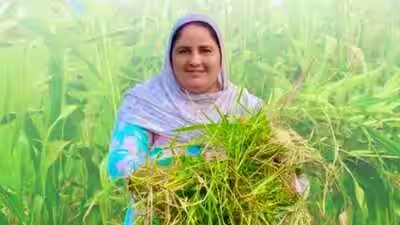
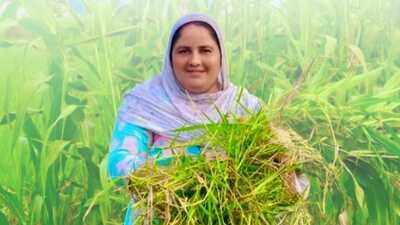
There’s a particular kind of quiet vindication in building a business out of exactly what people once mocked you for doing, and that’s precisely the story behind Mandeep Kaur Khaira’s journey in Moga, Punjab, as reported by The Indian Express. Starting with just half an acre of land she actually owns, Khaira has built a farming enterprise that now spans 40 acres, most of it leased rather than owned outright, generating an estimated Rs 80 lakh in annual revenue. It’s a scale of operation that would be notable for any farmer, but for a woman who was once ridiculed for working the fields herself, it reads as a genuinely striking turnaround.
Half an acre, a 40-acre enterprise
The numbers behind Khaira’s operation are worth sitting with for a moment. As per the Express, she personally owns just half an acre of land, a modest starting point by any measure, yet has built an agricultural enterprise spread across a full 40 acres, largely through leasing land from other owners rather than expanding her own holdings. To run an operation at that scale, she now owns three tractors, seven trolleys, and a full range of farm equipment collectively valued at around Rs 80 lakh, a substantial capital investment that reflects just how far the enterprise has grown beyond its original half-acre footprint.
From mockery to an Rs 80 lakh annual enterprise
What makes Khaira’s story resonate is the contrast at its centre, a woman once mocked for the very act of working in the fields herself has gone on to build an operation generating roughly Rs 80 lakh a year, cultivated largely on land that legally belongs to other people. Leasing land is a common practice in Punjab’s agricultural economy, but running a leased operation at this scale, with this much invested machinery and this level of annual return, marks Khaira out as a genuinely significant player in her region’s farming landscape, built almost entirely on land she doesn’t own outright.
Why this story matters beyond one woman’s success
Stories like Khaira’s carry weight well beyond the individual numbers involved. In a farming economy where land ownership often functions as the primary marker of status and security, her trajectory, scaling an operation nearly eighty times the size of her own owned land, points to what’s possible when leased land is managed with real ambition and investment behind it. It also speaks to a broader shift worth noting in Indian agriculture: women moving from being dismissed for physical farm labour to running large-scale, equipment-heavy operations that command genuine respect and turnover.
About the Author