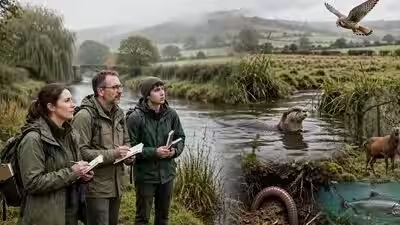
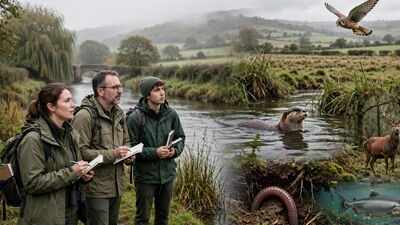
Human activities can look very different through the senses of a wild animal. A pioneering project in Somerset invited 18 volunteers to see the landscape from the perspective of red deer, otters, earthworms, kestrels and Atlantic salmon. Over six months, they spent time around the River Tone near Taunton, exploring the risks these animals may encounter in an environment shaped by human activity. Before each exercise, participants were briefed on how their chosen species experiences and senses its surroundings. They then used those insights to observe the landscape from an animal’s perspective. Their experiences were recorded and later mapped, helping the project identify potential threats related to food, shelter and safety.
How volunteers experienced life as wild animals near the River Tone
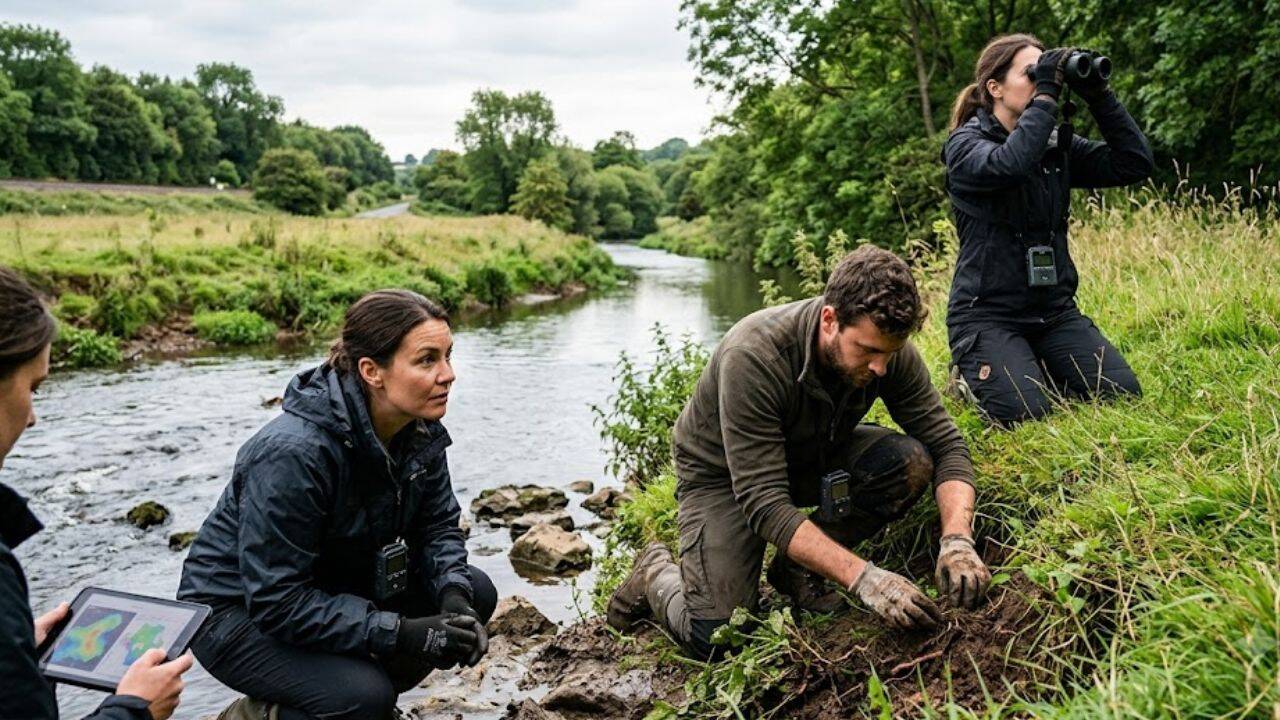
The 18 volunteers took part in the project over six months. Each person selected one of five species: red deer, otters, earthworms, kestrels or Atlantic salmon. Before entering the landscape, they received detailed briefings about their chosen animal, with particular attention to how it senses the world. They then spent a few hours at a time around the River Tone near Taunton while trying to experience the environment from that animal’s perspective. After each experience, participants gave their testimonies to the organisers. Their observations were used to identify perceived risks involving food availability, shelter and safety. These risks were then plotted on a digital visualisation tool of the river catchment.
PC: AI Generated
What threats did the volunteers identify
The participants identified several risks that may affect wildlife around the river. Dogs being walked in the area were a concern. Volunteers also reported the potential impact of dogs entering the river after flea treatment. Train noise was another risk identified during the project. Participants who were taking the perspective of otters found that crossing roads posed difficulties. For kestrels, volunteers noticed a shortage of long grassland where the birds could hunt for prey. The project also considered how conditions that seem ordinary to humans may be experienced differently by animals.
Why did researchers ask volunteers to experience life as wild animals
The project aimed to help people recognise risks that might otherwise be overlooked when wildlife is viewed only from a human perspective. Miguel Prado Casanova, the UWE Bristol project lead, said the exercise challenged assumptions about how people experience their surroundings. He noted that humans cannot fully reproduce the way an animal smells or sees its environment. Even so, the participants were able to approach the landscape differently by considering the sensory abilities of their chosen species. Some experiences were emotionally difficult. One participant who embodied an Atlantic salmon became emotional while giving their testimony.
How could seeing the landscape through animals change human decisions
The project also looked at possible ways to respond to the risks identified by participants. UWE Bristol gave examples of situations where human activities may affect wildlife in ways people do not immediately notice. The project also examined how loud noise from music festivals could affect deer in their sanctuary. People entering water after applying sun cream may affect aquatic animals and ecosystems. According to Miguel Prado Casanova, considering the sensory abilities of animals could lead people to make different decisions in such situations. The volunteers living near the River Tone will continue using the methodology as they develop plans to respond to identified risks.
Do you believe that human activities are significantly affecting local wildlife?
3k+ users shared opinion today
5k+ users already voted today
3k+ users shared opinion today
How could this wildlife approach be used in other communities
The volunteers involved in the River Tone project are expected to continue working with the approach and use the information gathered to address risks they identified. The project organisers will be using the same methodology with other communities and in different settings. UWE Bristol said the study had demonstrated that the approach worked well and the findings are due to be submitted for publication in an academic journal later in 2026. The researchers will also present their work at the Digital Design Weekend at the V&A South Kensington in September. The project was co-led by UWE Bristol and ASRA.
About the Author