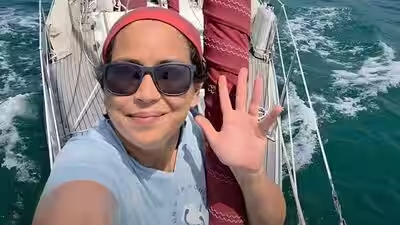
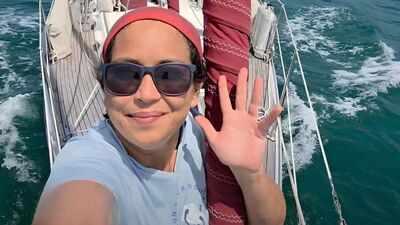
For most families, buying a house is seen as a way to give children stability and security. But for Vaidehi and Gaurav, stability meant something completely different. In 2022, the Indian couple made a life-changing decision. They sold almost everything they owned, left their jobs and bought a sailboat so they could travel the world and raise their daughter Kaeya at sea. Sharing their story in a video, Vaidehi explained why the family chose to leave behind a conventional lifestyle. “We sold almost everything we owned to live a life on a boat and raise our daughter on the ocean.” She said the decision was the opposite of what most families would normally consider for their children. “Most people buy a house to get their child’s stability. In 2022, we did exactly the opposite. We bought a sail boat.”
From a familiar life to a 42-foot sailboat
5 Oct 2026 | 12:06
Parents, when your child refuses to greet relatives, do you make them say hello or respect their choice?
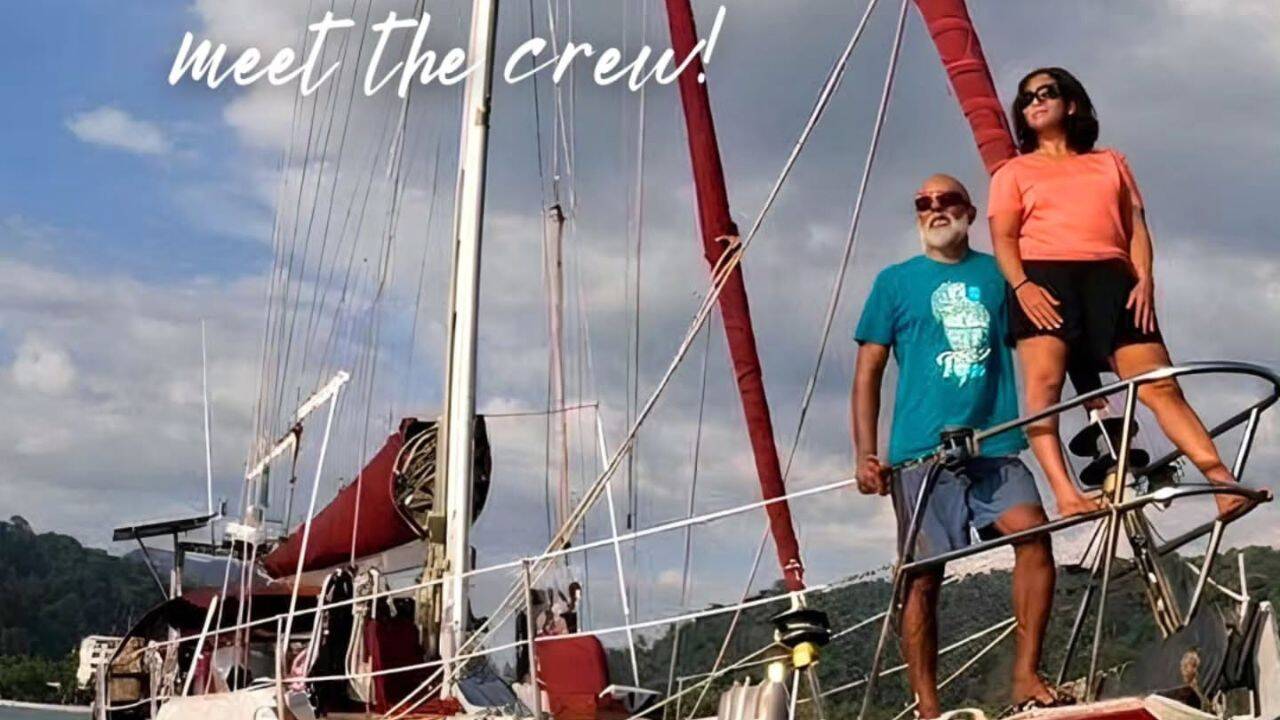
For years, Vaidehi and Gaurav had imagined living differently. Instead of following a traditional path of jobs, a permanent home and a predictable routine, they wanted their daughter to experience the world directly. “But Kaeya could grow up exploring the world, rather than just reading about it,” Vaidehi said. That dream eventually became a reality. The couple sold most of their possessions, gave up their jobs and walked away from the life they had built online. “So we sold almost everything we owned. Put our jobs and left the life we built online. Everything we kept fit into just 120 kgs,” she said. Their new home became Reeva, a 42-foot sailboat built in 1988 and designed to cross oceans. Instead of bedrooms, large kitchens and storage rooms, the family now lives in a much smaller space.“Now, home is two tiny cabins, a small sitting area, a galley, and a compact washroom,” Vaidehi explained. Every part of the boat has to be used carefully. There is limited storage, limited space and no room for unnecessary belongings. For the family, this has meant learning to think differently about what they actually need.
Learning to live with less
Interestingly, Vaidehi said learning to sail was not the hardest part of their new life. “People think the hardest part was learning to sail. It wasn’t. It was actually learning to live with less.” Life on a boat requires constant planning. Every meal has to be considered, supplies have to be managed, and everyday resources cannot simply be replaced whenever they run out. “Every square inch matters, every meal needs planning and every resource is carefully used,” she said. The family has also had to adjust to a reality that is very different from life in a city. When something is needed at home, there is no quick delivery service. “Because out here, if something runs out, there is no Blinkit, Zomato, or Amazon coming to rescue,” Vaidehi said.The boat is equipped to support their lifestyle. She explained that Reeva uses the movement and energy of the sea to power essential equipment, including the family’s fridge, freezer, laptop and navigation gear. Their surroundings may look adventurous, but the lifestyle also comes with practical challenges. Weather conditions can determine where the family can travel and when they can move. “Living at sea comes with its own reality. The weather decides where and when we move,” Vaidehi said.
Raising a child between oceans and borders
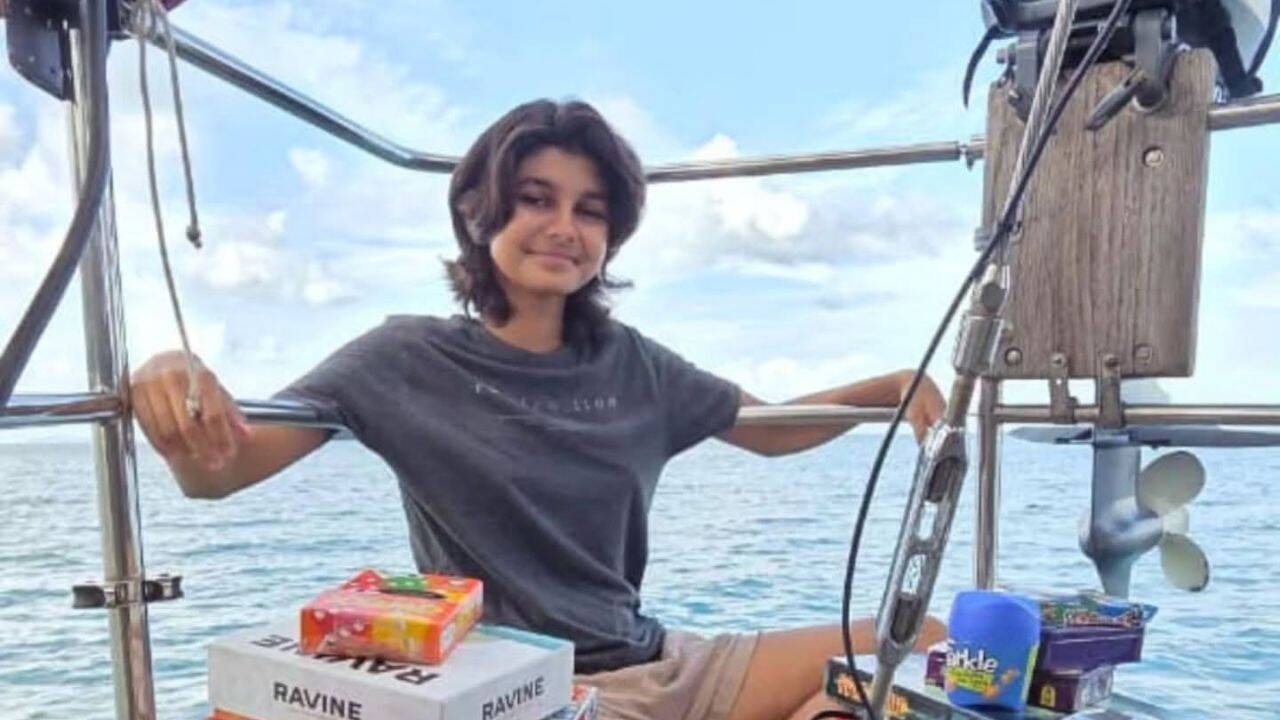
For Kaeya, the ocean has become much more than a holiday destination. It is where she is growing up. The family has travelled thousands of nautical miles across open oceans and international borders. Their journey has also involved navigating the challenges that come with travelling between countries. “Travelling between countries on our passports brings its own set of challenges,” Vaidehi said. Life at sea can also be unpredictable. The family have had to accept that they cannot always control what happens around them. “And some nights, the sea reminds us who’s in charge,” she said. Despite those challenges, the couple have watched their daughter grow up surrounded by the ocean. Instead of seeing the world only through books, photographs or screens, Kaeya has been able to experience different places as part of her everyday life. “We’ve crossed over thousands of nautical miles, across open oceans, and international borders. We watched our daughter grow up with the ocean as her playground.”
Choosing time, freedom and each other
The family’s journey has not been completely easy. Vaidehi admitted that there are difficult and unpredictable days, and sometimes the family questions the decision they made. “Some days are hard; some days are completely unpredictable. And on some days, we still wonder if we were actually crazy to do this.” Yet despite the uncertainty, the family believes the decision has given them something they could not find in their previous lifestyle. They initially set out looking for a simpler way of living. But after years of travelling and adapting to life on a sailboat, Vaidehi says they discovered something much more valuable. “We came looking for a simpler life; what we found was actually something far more valuable: time, freedom and each other.” For Vaidehi, Gaurav and Kaeya, home is no longer defined by four walls or a permanent address. It is a 42-foot sailboat moving across oceans, carrying everything they chose to keep and, more importantly, the life they chose to build together.
About the Author