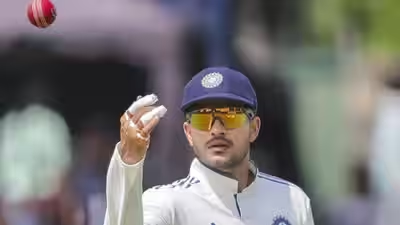
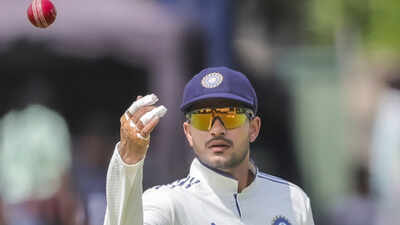
Minutes after India’s tense Champions Trophy semifinal win over Australia in March 2025 in Dubai, pacer Mohammed Shami made an impassioned plea to the ICC. He urged the governing body to lift its ban on the use of saliva to shine the ball, arguing it would help bring reverse swing back into the game.Back then, Shami had found support from former New Zealand captain and seamer Tim Southee, now England’s fast bowling coach, and former South Africa pacer Vernon Philander.Twenty months later, the debate refuses to go away. India captain Shubman Gill called on the ICC to revisit the saliva ban, arguing that the Kookaburra ball was going soft far too quickly and making it increasingly difficult for bowlers on unresponsive surfaces. “We are way past Covid times. There was a rule that you can’t apply saliva to shine the ball. It’s been 7-8 years now, I still don’t understand why they (ICC) are not allowing it,” Gill said after Test was drawn.The restriction was originally introduced in 2020 as a health precaution during the Covid-19 pandemic before the ICC made the ban permanent in 2022.Gill’s larger concern, though, was the quality and durability of the Kookaburra ball. “Our first ball, I think after 25-30 overs, became very soft. I think they also complained,” he said, “We saw this in England as well. In the first 3-4 matches, we were given a slightly different ball at the Oval.”For context, though, it must be remembered that in England, red-ball cricket is played with the Dukes ball.The India captain said the problem becomes particularly acute on pitches offering little assistance, because a soft ball not only reduces movement but also prevents edges from carrying to the keeper and slips.“I don’t know if the quality of the balls has come down, but in such conditions, if there is no help from the wicket, and the ball also becomes soft, then it becomes tough for the bowlers,” Gill argued, “The edges don’t carry. So, the caught-behind dismissal becomes harder. If there is not so much movement in the pitch, then the LBW remains on hold,” the skipper added.Gill believes restoring the use of saliva would at least allow fielding sides to maintain the ball better and potentially keep conventional and reverse swing in play.“Ideally, we understand after 50 overs, the ball obviously will go soft. But if the ball is going soft after 25-30 overs or it’s going out of shape and you’re also not able to maintain the ball and use saliva, then it’s a very difficult job for the bowlers.”“Probably, apart from Day 1, throughout the game, the ball tended to get soft,” agreed NZ skipper Tom Latham. He was, however, guarded on the use of saliva. “In terms of rules and conditions, from a saliva point of view, I’m not sure that will change with what the world’s been through.”
About the Author