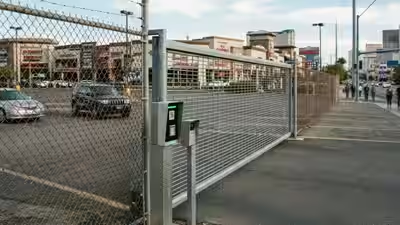

Iraqi Prime Minister Ali al-Zaidi on Tuesday ordered federal authorities to take control of all border crossings in the semi-autonomous Kurdistan region. He also directed the federal oil ministry to manage oilfields in several provinces, escalating tensions with Kurdish authorities.The orders come amid a crackdown on an alleged oil-smuggling network involving Iraq‘s state-run North Oil Company, according to Reuters.Zaidi also ordered the closure of unofficial border crossings and seasonal roads connecting the Kurdistan region with neighbouring provinces. He directed security forces to strengthen surveillance of oilfields and pipelines to prevent illegal oil trade.The prime minister further instructed the Kurdistan Regional Government (KRG) not to authorise crude oil or petroleum product exports without approval from the federal oil ministry.Kurdistan Region Prime Minister Masrour Barzani rejected Baghdad’s decision, calling it unacceptable and saying it contradicted assurances given by federal officials during recent talks between the two sides.“What was done today is truly surprising and in no way acceptable,” Barzani told reporters in Erbil.He said Kurdish authorities had been given a different message during meetings with Iraqi federal representatives, who had assured them that outstanding disputes would be resolved through dialogue and within the framework of Iraq’s constitution.“There have been mixed messages. The delegations we have met have given us a different message that pointed towards resolving outstanding issues on the basis of the constitution,” Barzani said.He maintained that his government would respect constitutional decisions but would not accept measures it considered unconstitutional. He also said preserving the Kurdistan region’s constitutional status and protecting the interests of its people remained a priority.The reaction comes after Barzani met Zaidi in Baghdad on November 9 to discuss the region’s share of the 2027 federal budget, oilfield management, revenue distribution and public-sector salaries. Both sides had agreed to work towards resolving their differences through constitutional means, according to the Kurdistan Regional Government.Why does Iraqi Kurdistan have control over its own affairsThe Kurdistan region has a high degree of self-government because of decades of conflict between Iraq’s central government and its Kurdish population. Its autonomy, which began taking shape in the 1990s, was formally recognised under Iraq’s 2005 constitution.The roots of Kurdish self-rule go back to the 1991 Gulf War. Following Iraq’s defeat in the war, Kurdish groups in northern Iraq launched an uprising against then-president Saddam Hussein.Iraqi forces retaliated, forcing thousands of Kurdish families to flee their homes. The United States, Britain and France subsequently established a no-fly zone over northern Iraq to protect the Kurdish population from further attacks.Following the US-led invasion of Iraq in 2003 and the fall of Saddam Hussein, Kurdish leaders participated in the formation of the country’s new political system. The 2005 Iraqi constitution formally recognised the Kurdistan region as a federal entity within Iraq under Article 117.Under Article 121, the regional government was granted executive, legislative and judicial powers in areas that do not fall exclusively under the federal government’s authority. This allowed the Kurdistan Regional Government (KRG) to maintain its own parliament, presidency, ministries and internal security forces, known as the Peshmerga.The arrangement gives Erbil considerable authority over regional administration, security and economic affairs, while Baghdad retains control over key national responsibilities such as foreign policy, national defence, currency and customs policy.In 2017, the Kurdistan region also held an independence referendum, in which an overwhelming majority voted in favour of separation from Iraq.Baghdad rejected the vote, while neighbouring countries and international powers opposed Kurdish independence. The referendum did not lead to independence, and the region remains part of federal Iraq.
About the Author