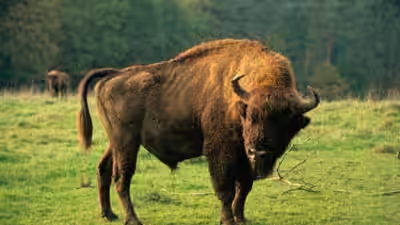
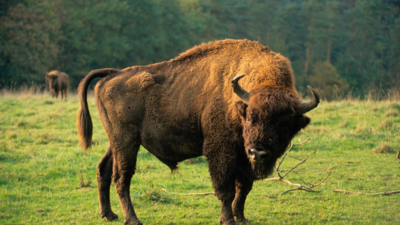
European bison are back in the Caucasus forests of Azerbaijan, nearly a full century after the last wild animal was shot there in 1927, leaving only a dozen in captivity. Released into Shahdag National Park, the herd now numbers around 90, and conservationists expect a total of 100 animals to have been released by 2029. The giant herbivores are expected to reshape their forest and subalpine meadow habitat in ways no other animal can, and the effort is part of a wider national drive to restore Azerbaijan’s ecosystems and soften the effects of a warming climate on local mountain communities.
Twenty captive-bred bison released in 2021 and later reinforcements have steadily built the herd
According to World Wildlife magazine, the first 20 captive-bred European bison were released from a reintroduction centre into the virgin broad-leaved forests of Shahdag National Park in 2021. Natural births and further reintroductions, including 18 bison earlier in 2026, have since built up the herd. By June, more than 25 calves had been born in the park, and several females were reported pregnant. New arrivals start in a fenced rewilding area and join the herd once they have adapted.The project is run by Azerbaijan’s Ministry of Ecology and Natural Resources with World Wildlife Fund, the European Association of Zoos and Aquaria, Tierpark Berlin, the International Dialogue for Environmental Action and other partners. It was co-financed by Rewilding Europe.
Almost 10,000 European bison roam freely in Europe, yet the Caucasus stayed empty for decades
Breeding and reintroduction work, World Wildlife magazine says, has restored almost 10,000 free-ranging European bison across the continent from that limited gene pool, while the Caucasus stayed without them for decades. The animals released in Azerbaijan are a hybrid of lowland and Caucasian bison, the product of a breeding programme that crossed European lowland animals with the last remaining Caucasian male. Many came from European zoos.
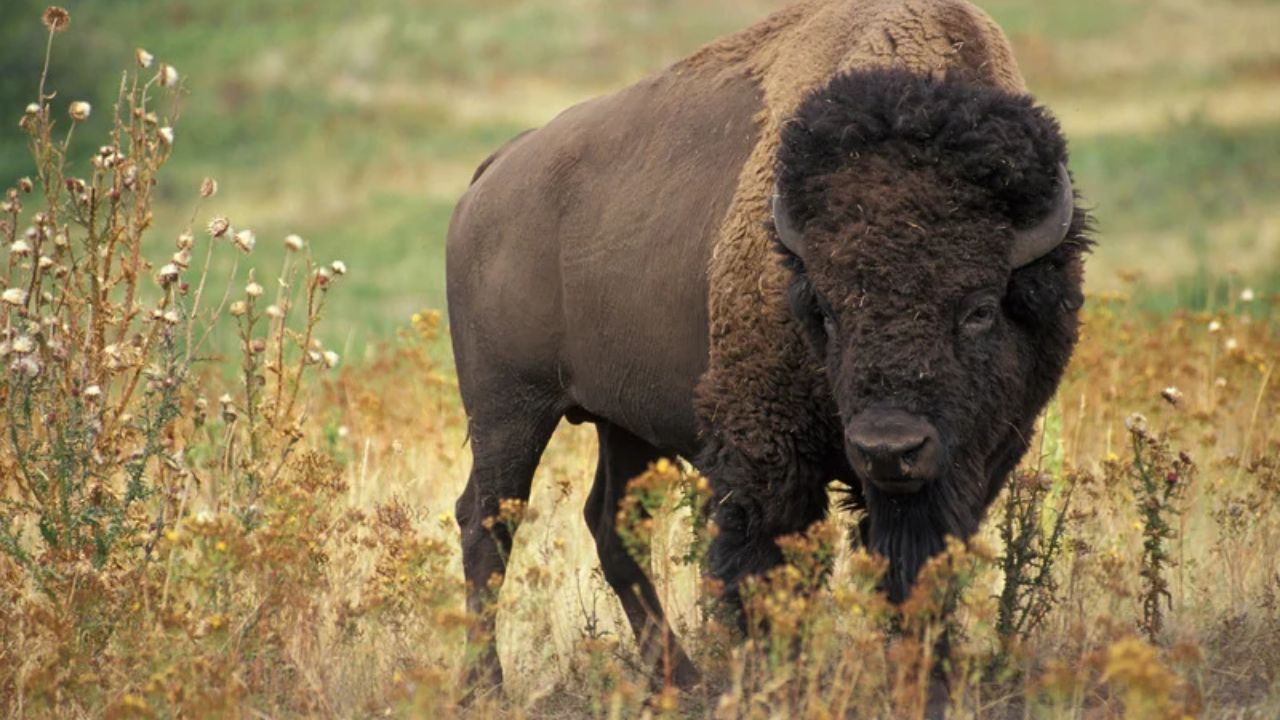
By June, more than 25 calves had been born in the park, and several females were reported pregnant (Image: Canva)
Eating up to 130 pounds of vegetation a day, bison act as ecosystem engineers in the mountains
Beyond the sheer volume of eating, the trampling, rolling and fertilising keep forest and subalpine meadow habitats healthy. The animals also spread seeds through their waste and change the composition of the soil. Their movement clears dense undergrowth, creating mosaics of vegetation that let grasslands recover and draw in smaller herbivores. More grassland attracts more insects, which in turn bring in more bird species, and a richer ecosystem is more resilient to climate change.That matters to the mountain grasslands that local communities rely on for food, fresh water and tourism income, which the bison help to stabilise.
Conservationists describe the first milestone as viable, yet one long-term goal is a herd of 500
The first goal is described as a viable population that could let the bison reclaim their place as a keystone species. A longer-term plan is more ambitious: grow the herd to 500 over 25 years, the minimum number needed for a sustainable population.
Gazelles, now numbering around 7,000, are helping endangered carnivores recover in Azerbaijan
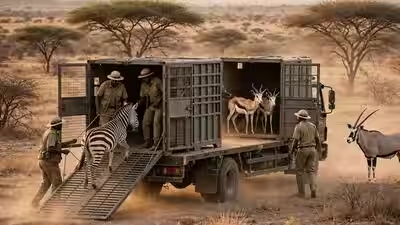
The bison project sits alongside efforts for other threatened species. Goitered gazelles once grazed the lowlands and foothills of the Caucasus in the tens of thousands, but poaching and habitat loss left fewer than 200 nationwide by 1960. Wildlife reserves and the reintroduction of more than 1,000 animals have since restored around 7,000 in Shirvan National Park. As prey, they support European lynx, striped hyenas and grey wolves, whose numbers have begun to recover.
Environmental groups across the region are watching, and one neighbour has shown interest
Other environmental groups in the region are following the bison project closely, and one of Azerbaijan’s neighbours has already shown interest in replicating it. Elshad Askerov, head of World Wildlife Fund Azerbaijan, told the United Nations Environment Programme that the rewilding projects are very successful and “a model for other Caucasian countries”. He hopes the separate herds will eventually meet and form one large Caucasian population.
About the Author