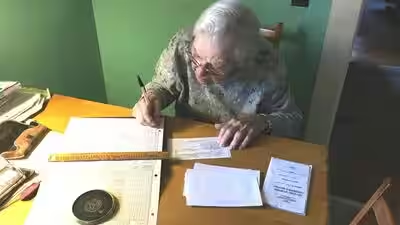
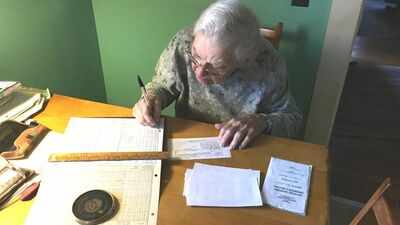
Arlene Cole spent more than six decades recording the weather from her home in Newcastle, Maine, turning a simple daily routine into a remarkable archive of local conditions. At 96, she has now retired from her work as a volunteer weather observer for the NOAA and the National Weather Service. Her final report came after more than 60 years of measuring temperatures, rain and snow and sending the information to others. For Cole, the work had become an ordinary part of life, but her records have also created a detailed picture of weather in her community.
How did Arlene Cole record weather for more than 60 years
Cole officially began making observations in 1965, when NOAA provided a weather station for her home on Academy Hill Road. According to the Bangor Daily News, she recorded the temperature and measured precipitation every evening at 5pm. She also began supplying weather reports to The Lincoln County News that same year.Her first official entry dates back to May 13, 1965. The Bangor Daily News reported that her notes for that day recorded a high of 65 degrees Fahrenheit, a low of 43 degrees and showers during the afternoon and evening. Over the years, she continued making observations with remarkable consistency.Cole also sent a monthly chart of her findings to the National Weather Service, a division of NOAA. The Bangor Daily News reported that a 2010 letter from NOAA official John Hayes recognised her 45 years of service and said her observations had contributed to work involving climate, commerce, transport and agriculture.
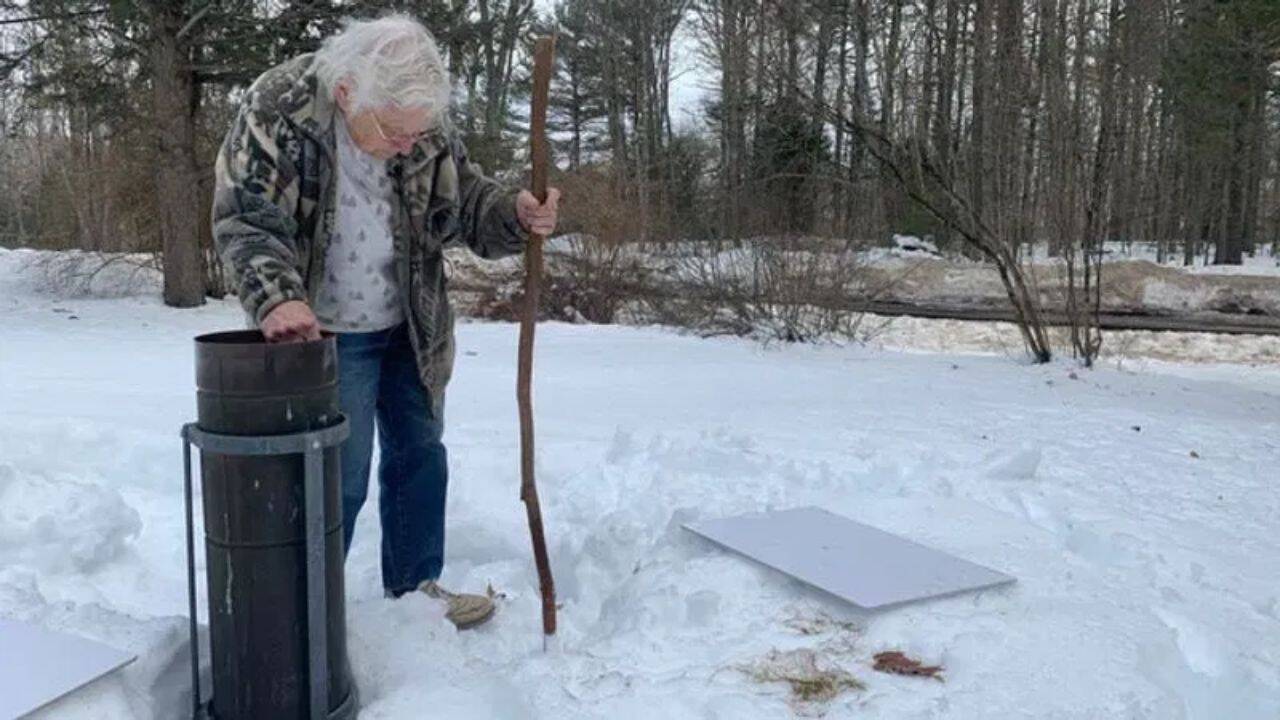
Image Credit: WSBT
Changes happened to her weather station when it was updated
The basic task remained much the same even as the equipment changed. When Cole began, she had to go outside to operate and check the weather station manually. The system was later updated in the early 1980s, allowing her to check the temperature using equipment inside her kitchen.A 2023 report by WSBT described how the indoor receiver was connected to an outdoor thermometer. The arrangement meant Cole could read the temperature without having to make the same trip outside each time.The outdoor equipment remained in her yard, however, and rainfall and snowfall still required attention. By the time she was in her nineties, getting outside to check precipitation had become increasingly difficult. The Bangor Daily News reported that her slower pace and the fact that she lived alone made the physical side of the work harder.
Why did Cole keep such detailed records
Cole did not simply send her observations away and forget about them. The Bangor Daily News reported that she kept a log of almost every day of her more than six decades of observations. Her records allowed her to compare current conditions with weather she remembered from many years earlier.That long memory was particularly useful when she considered unusual or dry periods. In 2026, for example, she compared the dry summer in her area with a similarly dry year in 1947, when she had graduated from Lincoln Academy.Her approach was also distinctly personal. WSBT reported in 2023 that Cole continued to use pen and paper even as many other observers had adopted computer technology. Her old records were kept in a briefcase, including material dating back to the beginning of her work.
How was her long service recognised
Cole’s dedication earned recognition from NOAA and the National Weather Service over the years. The Bangor Daily News reported that she received 5 awards during her time as an observer.Among those honours was the Thomas Jefferson Award, the National Weather Service’s prestigious recognition for volunteer observers. A National Weather Service publication previously highlighted Cole for taking high-quality observations for more than 45 years.Her work also placed her among a much larger network of volunteers. WSBT reported that more than 7,000 people across the United States were involved in observing and reporting weather conditions. These volunteers provide information from their local areas that would otherwise be difficult to capture through a single central system.
Importance of her records for Newcastle
The value of Cole’s work lies partly in its consistency. A weather reading from one day may appear insignificant, but thousands of readings collected at the same place over decades can show how conditions have varied over time.A September 2026 letter published by the Wiscasset Newspaper noted that Cole was one of thousands of volunteers in the US Cooperative Observer Program who reported to the National Weather Service. The letter also said the Newcastle station recorded a temperature of 101 degrees Fahrenheit on August 2, 1975, a record that still stands.The same letter explained that the monitoring stations are designed and installed for accurate measurements. When a station is retired, procedures are followed to relocate a replacement so that the continuity of the data can be maintained.
Legacy established by six decades of observations
After more than 60 years, Cole decided that continuing the routine was no longer practical. Her final report was published in The Lincoln County News, and the Bangor Daily News reported that she chose to stop before winter made the work even more demanding.Cole said there was no perfect time to retire, but she felt this was as good a point as any. Her decision came after decades in which the weather report had been part of her weekly and monthly routine.Her work for the community extended beyond weather. The Bangor Daily News reported that she wrote the Newcastle History column for more than 20 years and was involved with the Newcastle Historical Society, which she helped found with her husband, George Cole, in 1998. She also contributed to several books about the town.Retirement has not ended Cole’s interest in the weather. The Bangor Daily News reported that she plans to continue monitoring conditions for herself even though she will no longer submit official observations.The US National Weather Service Indianapolis, in a September 2026 post described long-term observations such as Cole’s as invaluable records of weather and climate. It also pointed to the example of Indiana observer Ruth Everhart, who recorded observations for nearly 64 years and 10 months.
About the Author