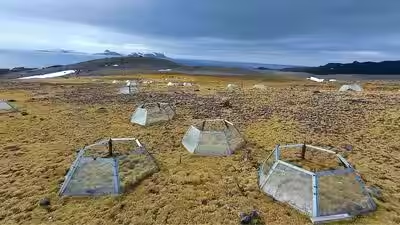
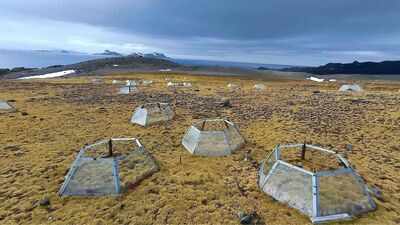
Antarctica has only two native flowering plants, and both have spent years facing a warmer environment. A new seven-year field study found that Antarctic hairgrass (Deschampsia antarctica) and Antarctic pearlwort (Colobanthus quitensis) responded to long-term warming in different ways. Researchers placed open-top chambers around plants on King George Island to create warmer conditions and compared them with plants growing outside the chambers.According to research published in Physiologia Plantarum titled ‘Contrasting Hydraulic-Photosynthetic Strategies Sustain Antarctic Vascular Plants Under Long-Term Warming’, the two species followed contrasting physiological pathways under sustained warming.
How did Antarctica’s two flowering plants respond to long-term warming
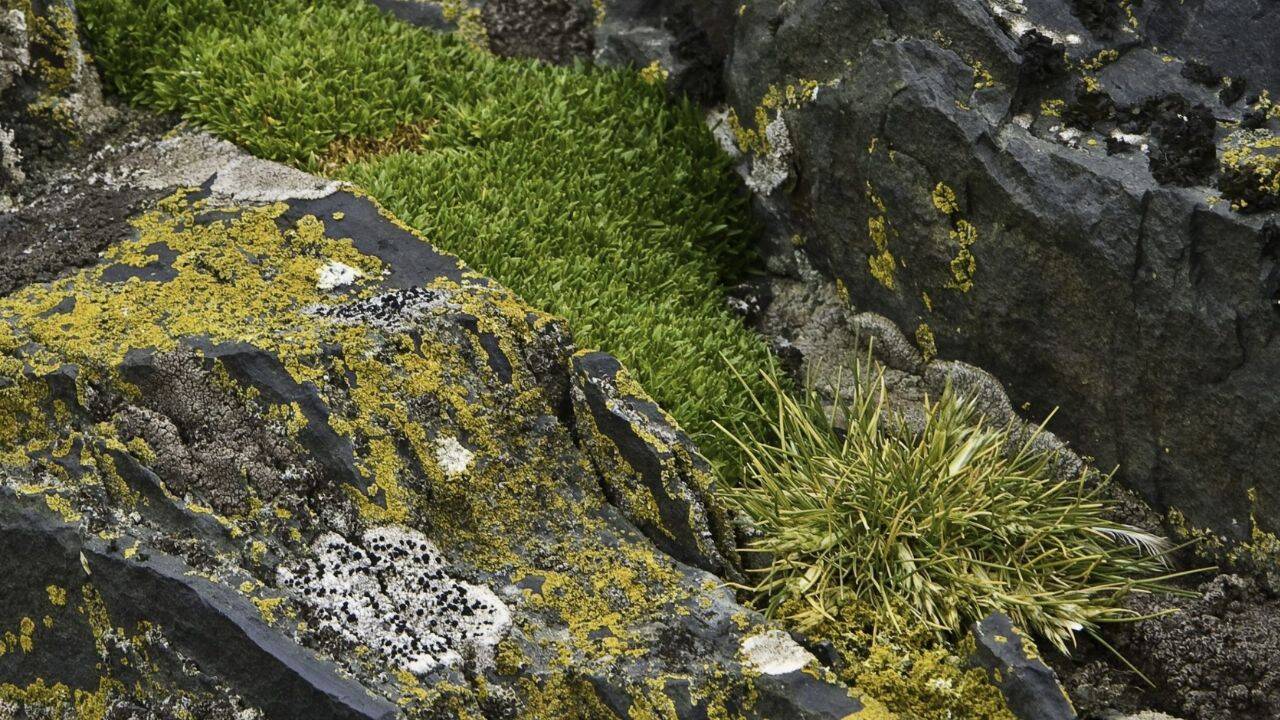
According to the BBC Wildlife, Antarctica is home to just two native vascular plants: Antarctic hairgrass and Antarctic pearlwort. Both are small plants that grow in wet, protected spaces between rocks, with clumps reaching around 5 cm in height. In 2012, researchers began a seven-year experiment on King George Island, an island just north of the Antarctic Peninsula, to understand how these plants respond to long-term warming.They set up plots and placed open-top chambers around some of the plants. The chambers passively warmed the air inside by several degrees, while plants outside them remained under natural conditions for comparison. The experiment continued for seven years. During this time, researchers examined leaf hydraulic traits, xylem anatomy, and photosynthetic performance in both species. They also recorded changes in freeze-thaw events during the study period.
PC: BBC Wildlife
Antarctic hairgrass reduced water transport and photosynthesis
After seven years under the warming chambers, Antarctic hairgrass showed reduced leaf hydraulic conductivity and reduced photosynthetic rate compared with plants under natural conditions. The study linked these changes to outside-xylem modulation and likely senescence associated with more frequent freeze-thaw events inside the chambers.Time below 0°C inside the chambers was nearly ten times that of plants outside, 309 hours versus 32. Antarctic pearlwort, exposed to the same warming treatment, responded differently. Its leaf hydraulic conductivity and photosynthetic rate both increased. The species also showed greater cell wall elasticity, along with enhanced water transport and carbon dioxide diffusion, triggered by changes in vascular anatomy and by a growth form that favors heat conservation.
The two Antarctic plants adapted differently to long-term warming
The two plants did not use the same response to long-term warming. Antarctic hairgrass reduced hydraulic conductivity and photosynthesis, while Antarctic pearlwort increased both. The researchers described these responses as complementary adaptive pathways.Both species showed structural and ultrastructural leaf adjustments that supported tight coordination between hydraulics and photosynthesis. In Antarctic hairgrass, the reductions were linked to outside-xylem modulation and likely senescence.In Antarctic pearlwort, changes included greater cell wall elasticity, enhanced water transport and carbon dioxide diffusion, along with changes in vascular anatomy.
Seven years of warming revealed different responses in two Antarctic plants
The seven-year experiment provides a long-term view of how Antarctica’s two native vascular plants respond to sustained warming in the field. The researchers found that both species maintained coordination between leaf hydraulics and photosynthesis, but their responses differed. Antarctic hairgrass followed a more conservative pathway, with lower hydraulic conductivity and photosynthetic rate after warming.Antarctic pearlwort showed greater hydraulic conductivity and photosynthetic capacity, along with increased cell wall elasticity and water and carbon dioxide transport. The findings show that warming does not produce one uniform response across the two species. Instead, each species adjusted through a different set of physiological and structural changes. The study describes these contrasting pathways as part of a shared adaptive continuum in Antarctica today.
About the Author